
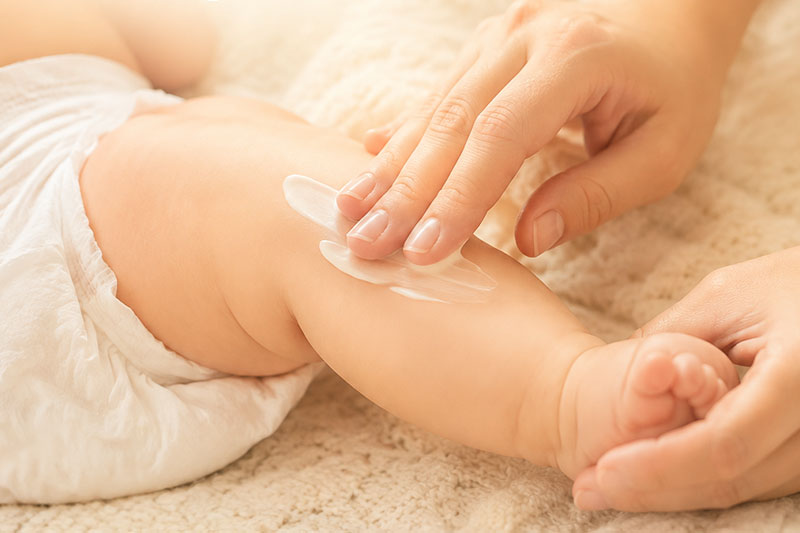
With so many baby-care products and routines to choose from, it is easy to feel that every moment needs another step. In the early weeks, care can be much simpler. Your baby’s age, skin condition and comfort matter more than the size of the product shelf. Start with gentle handling, sensible hygiene and advice that is appropriate for your own baby.
Keep the first weeks simple
NHS guidance recommends plain water for bathing during the first month, rather than adding liquid cleansers. It also advises waiting until a baby is at least one month old before using lotions or oils. [1]
Newborn skin may look dry or peel, and it does not always need another product. NHS guidance advises allowing the protective white coating present at birth to absorb naturally and avoiding unnecessary skin products in the early days. [2]
For a premature baby or a baby with a diagnosed skin condition, follow the care plan given by your healthcare team rather than a general routine.
Make bath time calm and safe
A newborn does not usually need a bath every day; NHS guidance suggests two or three baths a week may be enough. Between baths, keep the areas that need cleaning comfortable and clean. [1]
Prepare towels, clothes and a clean nappy before you begin. Check the water carefully so it is comfortably warm, support the head and shoulders, and never leave a baby alone in the bath. A short, well-prepared bath can be a reassuring shared moment without needing an elaborate routine.
Give the nappy area everyday attention
Wet or dirty nappies should be changed promptly. Clean the area gently with water or fragrance-free, alcohol-free baby wipes and dry it with care. A well-fitting nappy should feel secure without rubbing or being too tight. [3]
If nappy rash is uncomfortable, a pharmacist or clinician can advise on a suitable treatment or barrier preparation. Avoid using talcum powder or antiseptic creams on a nappy rash unless you have been specifically advised to do so. More products are not always a better response to irritated skin.
Choose care for your baby, not someone else’s
A routine that suits one family may not be right for another. Your baby’s stage of development, any existing skin problem and advice from a healthcare professional should guide product decisions. Follow age directions on the current pack, and ask if you are unsure.
Try to describe concerns clearly: when you first noticed a change, where it appears, whether your baby seems uncomfortable and whether anything in the routine changed. These observations are often more useful than guessing a diagnosis from a photograph or a product advertisement.
Know when to ask for help
Nappy rash that does not improve, spreads or gets worse should be checked. A high temperature or a baby who seems very uncomfortable is also a reason to seek medical advice. [3]
You do not have to wait until you have tried several products before asking. A healthcare professional can help distinguish an everyday care issue from a condition that needs treatment. Care for a baby should make room for reassurance and support, rather than pressure to get every detail perfect.
Sources & further reading
This article provides general educational information and is not a substitute for advice from a qualified healthcare professional. Read our disclaimer.